
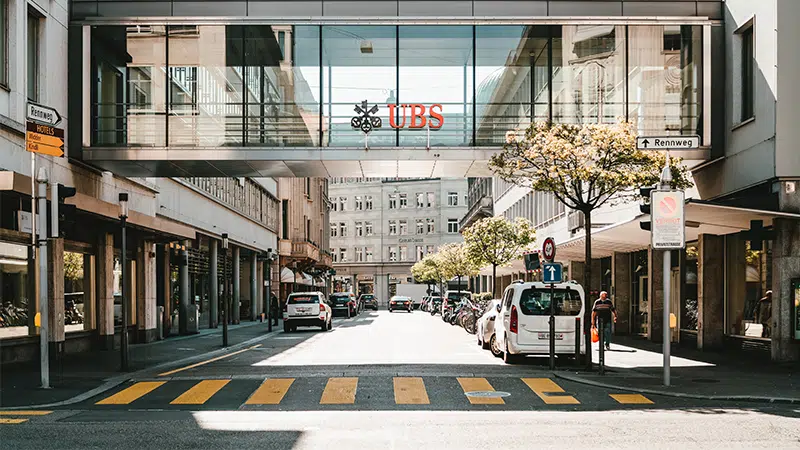

Opening a bank account in Switzerland
Are you a cross-border worker or an expatriate in Switzerland? Opening a bank account is an essential step when you move to Switzerland or start your career there.
• Opening a bank account in Switzerland is a quick process open to residents and non-residents alike, on presentation of ID, proof of address and proof of income.
• French residents can legally open an account in Switzerland, but must declare it every year to the French tax authorities.
• Some major Swiss banks (UBS, Credit Suisse) have branches in France, making it easier to open an account even before relocating.

Receiving your salary, paying bills or rent… Opening a Swiss bank account will certainly make all your financial arrangements (salaries, bills, rent) much easier once you’re there! Plan ahead by finding out about the banks and the various options available to you. In this article, b-sharpe, your currency exchange partner, explains everything you need to know about opening a bank account and Swiss banks.
Opening a bank account in Switzerland: a quick and easy process
Opening a bank account in Switzerland is easier than you might think. For French expats or cross-border workers, the process is usually quick. What are the requirements for opening an account in Switzerland? What supporting documents are required? Find out below.
Good to know: some Swiss banks, such as UBS and Credit Suisse, have branches in France where you can open a bank account.
How to open a bank account in Switzerland
When you open your new bank account in Switzerland, you will, of course, need to provide certain documents to your new bank. Whilst the required documents may vary from bank to bank, you will always be asked to provide:
- Proof of identity, such as a passport or national identity card;
- Proof of address (an electricity, internet or water bill, etc.)
- Bank statements;
- Proof of employment in Switzerland;
- Proof of income.
Is it possible for a French citizen to open a bank account in Switzerland?
Can I open a bank account in Switzerland if I am a French national? Absolutely. It is legal for French nationals to open a bank account in Switzerland. However, you are required to declare any bank accounts held abroad to the French tax authorities and to include them in your annual tax return.
Can you open a bank account in Switzerland if you are a non-resident?
Do you live in France or elsewhere abroad, outside Switzerland, and wish to open a bank account in Switzerland? It is possible! However, some banks may ask you to make a substantial deposit, or require you to provide proof of income to demonstrate your creditworthiness. Furthermore, the tax authorities in your country of residence must be notified of the opening of a foreign bank account. Your Swiss bank will therefore have to send a list of all transactions carried out to the tax authorities in your country every year.
Is it possible to open an account online?
Good to know: you can open a bank account in Switzerland online or remotely. However, you will need to submit all the necessary documents online or by post, depending on the option you choose.
Everything you need to know about banks in Switzerland
As you’re no doubt aware, Switzerland is the banking capital of the world! There’s therefore a wide range of banking options available… From traditional players such as PostFinance, Credit Suisse and UBS to neobanks like Swissquote and Yuh… How do you make sense of it all? Here are the key factors to consider when choosing your banking partner, before opening an account in Switzerland.
The advantages of Swiss banks
Why open a bank account in Switzerland? The Swiss banking system is renowned worldwide… Swiss banks offer a number of advantages:
- Greater security for funds: the Swiss financial landscape is one of the most heavily regulated in the world. Financial regulators impose strict rules on banks, particularly regarding the protection of funds and banking secrecy. Indeed, national law stipulates that banks may under no circumstances disclose their clients’ financial information.
- A world-renowned financial system: the Swiss financial centre offers banking services of the highest standard. This applies not only to traditional banks but also to private banks specialising in wealth management.
- Economic stability at national level: as you know, Switzerland is an economically stable country. Wages and the standard of living are very favourable. The Swiss minimum wage is among the highest in the world. The pension system (Swiss LPP) is also robust. Banks therefore benefit from a favourable political and economic climate.
Opening a bank account in Switzerland: how to choose the right bank?
Which is the best bank to open an account with in Switzerland? It’s hard to say, given the sheer number of banks in the country! They offer a range of services and tailor their offerings to their customers’ needs. Switzerland is a federal and multilingual state. As such, there are several types of banking institutions:
- Universal banks, which operate nationwide;
- Local banks operating at cantonal level;
- Co-operative banks;
- Private banks, which specialise in wealth management;
- Online banks (neobanks).
Are you looking to open a current account (also known as a salary account) in Switzerland? If so, universal or cantonal banks will undoubtedly be the most suitable option. Finally, there is another option available to you: online banks. Flexible and paperless, they often charge lower bank fees.
Are you a cross-border worker living in France? You should know that some Swiss banks offer so-called “cross-border” accounts, specifically designed for this particular status! These accounts offer few options, as they are designed solely to receive your salary and transfer it to a French account in euros. This is an advantageous and less expensive solution for having your salary paid in Swiss francs (CHF). However, you should check with your employer before opening a cross-border account with a French bank: some Swiss employers require a Swiss IBAN for salary payments.
The issue of bank charges
What are the costs associated with debit and credit cards? Bank charges in Switzerland are relatively high. This is an important point to bear in mind before opening a bank account in Switzerland. Be sure to compare the offers from different banks.
The amount of the monthly account maintenance fee varies from bank to bank. On average, it amounts to 20 Swiss francs for a current account that includes a debit card. The more features and services your bank account includes, the higher the fees will be. Withdrawals from ATMs (also known as Bancomats in Switzerland) belonging to your chosen bank are generally free of charge. Some banks charge a fee if you withdraw from a Bancomat belonging to another bank. International transfers or withdrawals abroad may also be subject to charges. The same applies to overdraft charges.
Finally, if you travel regularly within the eurozone or are a cross-border worker, consider choosing a bank that allows you to withdraw cash in both euros and Swiss francs. However, you can still exchange currencies online easily and at preferential rates using a euro-to-Swiss franc converter such as b-sharpe.
FAQ
Are you a cross-border worker or an expat looking to open a bank account in Switzerland? b-sharpe has all the answers to your questions about opening a bank account in Switzerland.
What are the requirements for opening a bank account in Switzerland?
Opening a bank account in Switzerland is a very straightforward process. This applies even to non-residents. What are the requirements? You must be of legal age, provide a work permit (or G permit), proof of identity and proof of address, as well as a statement explaining the source of your funds. Please note that US citizens may only open a Swiss bank account under certain conditions.
Can I open a business bank account in Switzerland as a French national?
Technically, yes. But that means your business must be registered in Switzerland. Switzerland offers many advantages for entrepreneurs, including a simplified administrative framework and faster processing times compared to France. However, certain eligibility criteria must be met to set up a business as a foreign national. Therefore, it is essential to hold a residence permit (type B or G) or to partner with a Swiss resident in order to legally establish a company in the country.
Setting up a business, and therefore opening a business bank account in Switzerland, can be more complicated for non-Swiss residents due to strict compliance requirements. Swiss banks scrutinise the source of funds and the business sector very closely. It is advisable to seek professional assistance to streamline this process and ensure compliance with Swiss banking regulations.
Can a French citizen open a bank account in Switzerland?
Yes, a French national can certainly open a bank account in Switzerland. However, the situation may vary depending on their residency status (residence permit, cross-border worker status, non-resident). Please contact a Swiss bank for further information.
Can you open a bank account in Switzerland for free?
Yes and no. Traditional Swiss banks charge account maintenance fees, so it is not possible to open an account with them for free. However, some online banks (or neobanks) based in Switzerland offer free account openings. You will then have a Swiss IBAN in CH. Some fees or services will subsequently incur a charge. Their services are provided entirely online. Please note: make sure you check carefully beforehand, as these banks are not always compatible with receiving your Swiss salary. Some employers require accounts with traditional banks. However, neobanks are still useful for holding a secondary account.
How can I convert my Swiss francs into euros without a Swiss bank account?
If you live or work between France and Switzerland, you will no doubt need to regularly convert currency between euros and Swiss francs, and vice versa. To exchange your currency, there are several options available to you, such as traditional banks or bureaux de change, financial institutions specialising in foreign currency conversion. It is also possible to exchange your euros or Swiss francs, as well as many other currencies, directly online. b-sharpe offers an online currency converter, updated in real time, for all your transactions. Take advantage of competitive rates to carry out your online currency exchanges in over 20 currencies: Swiss francs to euros, Swiss francs to pounds sterling, or even dollars to euros…
b-sharpe allows you to benefit from a very competitive exchange rate compared to traditional providers. The rate offered for EUR-CHF or CHF-EUR conversions is therefore significantly lower than that of a traditional bank. Every transaction is carried out with complete transparency. The fees applied to each transaction are clearly stated before each conversion. b-sharpe guarantees its users transparency and security.
To live in Switzerland, opening a local bank account is essential. But to help you settle in Switzerland and manage your finances, you will also need a currency converter. b-sharpe supports you in all your transactions, enabling you to exchange currencies online easily, reliably and transparently.