
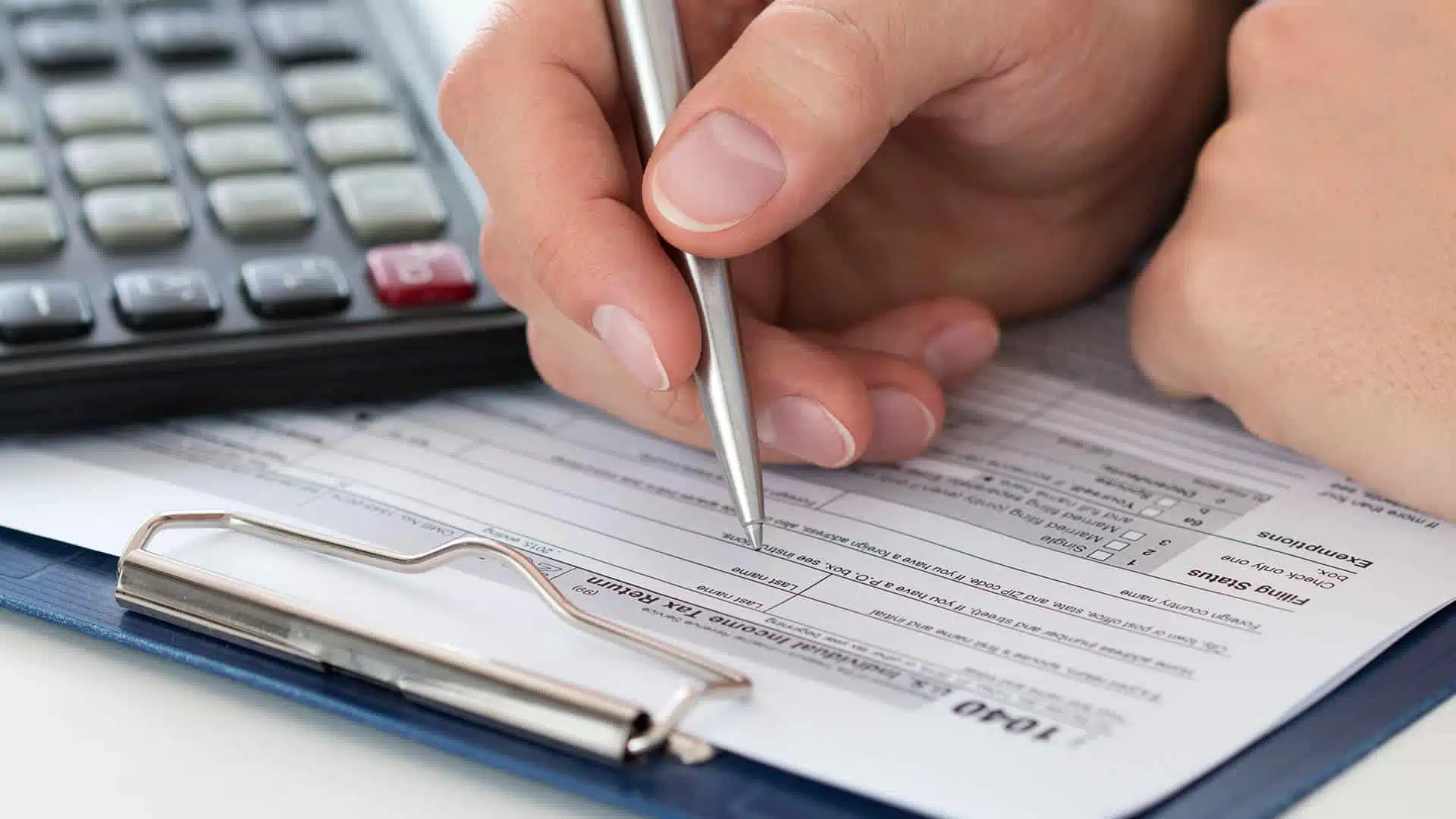

Tax returns in France: accounts that must be declared to the French tax authorities
It is now time to file your tax return in France. This applies to all Swiss residents with income from French sources (such as foreign residents in Switzerland with rental income in France, or residents in France who are employed in Switzerland).
• Every French tax resident must declare accounts held abroad, including Swiss accounts or 3rd pillars, or face a €1,500 fine per undeclared account.
• This obligation applies both to French residents working in Switzerland (cross-border workers) and to Swiss retirees living in France who receive Swiss income.
• Salary, savings and securities accounts held at a Swiss bank must all be listed in the tax return, whether still active or closed during the year.

Among the information that must be provided to the French tax authorities are accounts held abroad (that is, outside France from their perspective). This affects some of our clients who hold accounts in Switzerland or Germany, or who have a third-pillar pension. However, it is not always straightforward to know which accounts must be declared as foreign accounts and which do not need to be. As the consequences for the taxpayer can be significant, with fines at stake, we offer a short practical reminder for your tax return in France.
Which taxpayers must file a tax return in France?
- Anyone resident in Switzerland who receives income from French sources: for example, someone who rents out a property in France and earns income from it.
- Swiss pensioners who have settled in France and receive income from Switzerland
- French residents who carry out a paid activity in Switzerland. As soon as someone working in Switzerland is resident in France, they are required to file a tax return, even where their income is taxed at source, as is the case, for example, for cross-border workers in Geneva or Zurich.
In short, whatever their canton of employment (Geneva, Vaud, Neuchâtel, Zurich, Basel, etc.), these taxpayers must file a tax return in France.
French tax law on declaring foreign accounts: what you need to know
Any individual resident in France must declare to the French tax authorities, in their tax return, the accounts they hold abroad. This declaration must include accounts that are currently open and in use, as well as any closed during the year.
The accounts concerned are salary accounts, savings accounts and so-called ordinary accounts opened outside France, whether they hold cash or securities, in accordance with the Finance Act.
Furthermore, failure to declare exposes the taxpayer to a fine of €1,500 per undeclared account.
Bank and savings accounts to declare (or not) to the French tax authorities
- Salary accounts, savings accounts (in any currency) and securities accounts opened at a Swiss bank (Credit Suisse, UBS, a cantonal bank, PostFinance, etc.): these accounts must be declared to the French tax authorities.
- Bank accounts in France (including digital banks such as ING Direct, Fortuneo, Boursorama, etc.): these accounts do not need to be declared as foreign accounts.
- Foreign bank accounts: paragraph 2 of Article 1649 of the French General Tax Code (‘CGI’) requires the taxpayers concerned to declare bank accounts opened, held, used or closed abroad (that is, outside France). Article 344-A of Annex III to the CGI clarifies, for the purposes of applying paragraph 2 of Article 1649 of the CGI, that “an account is deemed to be held […] where [the taxpayer concerned] is its holder, joint holder, beneficial owner or economic beneficiary”. The obligation to declare accounts opened abroad does not require submitting statements for those accounts, but their details, namely the account name, the name of the institution managing the account (including its address), the account number, the account’s characteristics, and its opening and closing dates.
- The third pillar: whatever type of third pillar you hold (bank or insurance-based pillar 3a, or pillar 3b), this financial product must be declared to the French tax authorities, as it is treated as a foreign account.
- Accounts with the German bank N26: some b-sharpe clients, particularly those working in the cantons of Basel and Zurich, hold accounts with N26, the German digital bank. N26 accounts must be declared to the French tax authorities as foreign accounts.
- Prepaid accounts such as Any.time: the difficulty here lies in identifying which country the institution managing these services is based in. This type of provider is something of a special case, as they are not, strictly speaking, banks. According to the French tax authorities, however, this type of service undoubtedly functions as a substitute for a bank account and can be treated as such. It is therefore necessary — and this is the tricky part — to establish which country the managing company is based in. They are often based in other European countries, which allows them to hold a European licence to offer their services, including in France. In the case of Any.time, for example, the company is Belgian. Consequently, this type of account must be declared to the French tax authorities as a foreign account.
- PayPal accounts: many taxpayers hold a PayPal account. Here too, a declaration is required, as PayPal, the company holding the accounts, is based outside France (in Luxembourg).
However, you do not need to declare your PayPal account when:
- the PayPal account is linked to an account in France
- and the PayPal account received less than 10,000 euros during the year
- and the PayPal account is used to pay for online purchases (or to receive payment for goods sold), rather than to build up savings.
How to declare your foreign accounts
For foreign accounts to be declared in France on your tax return, the procedure is as follows:
- This declaration is made using CERFA form no. 3916 (or can be selected directly within the online income tax return service), and amounts do not need to be specified
- On the tax return, you must also tick box 8UU (and box 8TT for pillar 3b and insurance-based pillar 3a)
- For the third pillar, you must state the type of contract on a separate sheet or in the comments field, along with the surrender value as at 31 December of the previous year (a document usually provided by your insurance company)
What should you do if you forgot to declare an account?
If you opened an account abroad, have already filed your tax return for the previous year, and forgot to declare that account, simply download the CERFA form no. 3916 above, fill it in, and send the French tax authorities a supplementary declaration, or use a plain letter.
In conclusion, I hope this article helps you understand clearly which accounts to declare, and which not to. In any case, I can only encourage you to be completely transparent with the tax authorities. I wish you all the best of luck with your tax return!
Note: the information in this article should not be taken as tax advice. If you would like further information, we recommend you contact the tax authorities, a tax adviser or an accountancy firm.